
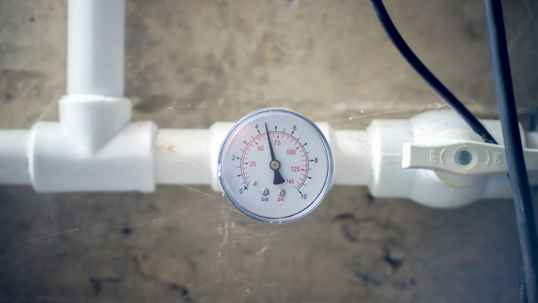
Normal home water pressure runs between 40 and 80 psi, with 60 psi a comfortable middle ground. If yours is running consistently above that range, it's quietly stressing your pipes, fixtures, and appliances every time you turn on a tap. If it's below it, you may have a leak, mineral buildup, or a supply issue somewhere in the system.
Most homeowners don't know where their pressure sits until something goes wrong. Spring is a practical time to find out.
Signs Your Pressure May Be Off
- Banging or hammering sounds after a valve closes (water hammer)
- Dripping faucets or fixture leaks that appeared without obvious cause
- Weak or inconsistent flow at one or more fixtures
- A water bill that's gone up without a change in usage
Why High Pressure Does More Damage Than You'd Expect
High pressure is the more common and more damaging of the two problems. Excessive pressure puts continuous mechanical stress on every component in your system, accelerating wear on seals and washers, shortening appliance lifespans, and contributing to water hammer over time. It also moves more water through every fixture on every use, which shows up on your utility bill.
If your home doesn't have a pressure reducing valve (PRV) installed, your plumbing may be running at whatever the municipal supply delivers, which often exceeds 80 psi.
What Low Pressure Usually Points To
Low pressure throughout the house typically points to one of these:
- A PRV that needs adjustment or replacement
- A partially closed shutoff valve
- A leak somewhere in the system
- Mineral buildup inside pipes — common in the Raleigh area, where harder water accelerates accumulation over time
Low pressure at a single fixture usually means buildup at that location specifically, often at the aerator.
How to Get a Reading
A basic pressure gauge runs about $10 to $15 at any hardware store. Attach it to an outdoor hose bib or laundry spigot with no other water running, turn it on fully, and read the result.
Above 80 psi consistently is worth addressing.
When to Call a Plumber
A reading outside the normal range is worth a call. So are:
- Banging or hammering sounds in the walls after a valve closes
- Fixture leaks that appeared without obvious cause
- A water bill that's climbed without a change in usage
- Weak flow at multiple fixtures throughout the house
Some pressure issues are simple adjustments. Others point to something that's been developing quietly for a while. Either way, catching it early is less expensive than dealing with the damage later.
Midtown Plumbing, LLC serves homeowners throughout Raleigh, Cary, Durham, and the surrounding area. Give us a call at (919) 373-6788 to schedule a pressure check or get a second opinion on something that's been on your radar.