
Why Pipe Age Matters in Older Raleigh Homes
If your Raleigh home was built before the mid-1990s, the pipes behind your walls may be closer to the end of their life than you think. Neighborhoods inside the Beltline date back to the early 1900s, and much of North Raleigh, Cary and Garner went up during the building boom of the 1970s through the 1990s. Each era used its own piping, and each comes with its own weak spots.
The real question isn’t just “Is my plumbing old?” It’s “What kind of pipe do I have, and how is it holding up?” Below, we walk through the three materials we see most often in older Triangle homes: polybutylene, galvanized steel and copper. We’ll cover how to spot each one, the problems to watch for, and when a full repipe makes more sense than another repair.
Polybutylene Pipe: The Plastic That Didn’t Last
Polybutylene (often called “poly” or “PB”) is a flexible plastic pipe installed in millions of U.S. homes from roughly the late 1970s to the mid-1990s. Builders loved it because it was cheap and fast to install. Homeowners learned the hard way that it fails without warning.
Why Polybutylene Pipe Fails
The chlorine and other disinfectants in municipal water slowly react with polybutylene, making it brittle and causing tiny cracks from the inside out. Because the damage starts on the inside, the pipe can look perfectly fine right up until it splits. Poorly installed or crimped fittings add another point of failure. Problems with the material led to a major class-action settlement in the 1990s, and it is no longer accepted by U.S. plumbing codes.
How to Spot Polybutylene Pipe
- Flexible gray pipe (sometimes blue or black), usually about half an inch to one inch thick
- A stamp reading “PB2110” printed on the pipe
- Gray pipe coming off the water heater, under sinks, or running through an unfinished basement or crawl space
- Plastic or copper crimp rings at the fittings
Why It Matters Beyond Leaks
Some insurance companies charge more for homes with polybutylene, limit coverage, or decline to write a policy at all. Buyers and home inspectors also flag it, which can complicate a sale. If your home has poly, we generally recommend replacing it on your schedule rather than waiting for a burst pipe to set the timeline for you.
Galvanized Steel Pipe: Rusting From the Inside
Galvanized pipe is steel coated in zinc to slow rust. It was the standard for water lines in homes built before about 1960, so it’s common in Raleigh’s older neighborhoods like Oakwood, Five Points, Hayes Barton and Mordecai. Galvanized pipe typically lasts 40 to 60 years, which means most of what’s still in service is living on borrowed time.
What Goes Wrong With Galvanized Pipe
Over the decades the zinc coating wears away and the steel underneath begins to corrode. Rust and mineral scale build up inside the pipe, narrowing the opening the way plaque narrows an artery. Eventually the pipe rusts through, often at threaded joints where the wall is thinnest.
Warning Signs of Galvanized Pipe Trouble
- Low water pressure, especially when two fixtures run at once
- Brown, yellow or rusty water, most noticeable first thing in the morning
- Pressure that’s fine at one faucet but weak at another
- Leaks or rust stains at threaded fittings
A Health Note on Lead
Galvanized pipe can collect lead over time, especially if it was ever connected to a lead service line or contained lead impurities in its original coating. That lead can break loose as the pipe corrodes. If you have galvanized pipe and are concerned, the City of Raleigh and certified labs can help with water testing.
How to Spot Galvanized Pipe
Galvanized pipe is dull silver-gray, rigid, and joined with threaded fittings. A quick test: a magnet will stick to galvanized steel but not to copper or plastic.
Patching galvanized pipe rarely solves the problem for long. Clearing one clogged section often just reveals the next one, which is why galvanized homes are among the most common candidates for a full repipe.
Copper Pipe: Reliable, But Not Problem-Free
Copper has been the gold standard for residential water lines for decades, and a well-installed copper system can last 50 years or more. Still, “copper” doesn’t automatically mean “no worries.” These are the copper pipe issues we run into most often around the Triangle.
Pinhole Leaks
Tiny holes that start as a slow drip or a damp spot on drywall or a ceiling. They’re usually caused by pitting corrosion, where the inside wall of the pipe wears away in small spots. One pinhole leak is often a sign that others are forming nearby.
Water Chemistry
Water that is slightly acidic, high in dissolved oxygen, or treated with certain disinfectants can slowly eat away at copper. Homes on private wells, which are common in outlying parts of Wake County, can be especially prone to this if the water is acidic. Blue-green stains in sinks and tubs are a telltale sign.
Thin-Walled Pipe
Copper comes in different wall thicknesses. Some homes were plumbed with the thinnest grade (Type M), which has less material to lose before a leak develops.
Galvanic Corrosion
When copper is connected directly to galvanized steel without a proper dielectric fitting, the two metals react and corrode the joint. We see this often in older homes where copper was added during a partial repair.
Erosion From High Pressure or Velocity
Water pressure that’s too high, or water moving too fast through undersized pipe, can wear through copper at elbows and bends. A pressure-reducing valve may help.
Bad Joints and Freezing
Aging solder joints can weep over time, and copper running through vented crawl spaces is vulnerable during the occasional hard freeze North Carolina sees.
A single copper leak is usually a repair job. Repeated pinhole leaks in different spots, though, usually point to a system-wide problem that patching won’t fix.
Repair or Repipe? Signs It’s Time
Repiping replaces the water supply lines throughout your home. It’s a bigger project than a leak repair, but it can save money and stress when the whole system is failing. A repipe is worth serious consideration if any of these apply:
- Your home has polybutylene pipe anywhere in the system
- You have galvanized pipe and are seeing low pressure or discolored water
- You’ve had two or more leaks in the past year or two, especially in different locations
- Your pipes are 50+ years old and you’re planning a remodel that opens up walls anyway
- Your insurance company or a buyer’s home inspector has flagged your plumbing
- You’re seeing water stains, mold, or warped flooring with no single obvious cause
On the other hand, if your system is copper in good shape and you’ve had one isolated leak, a targeted repair is usually the smarter call. A good plumber will tell you honestly which situation you’re in.
What a Repipe Looks Like
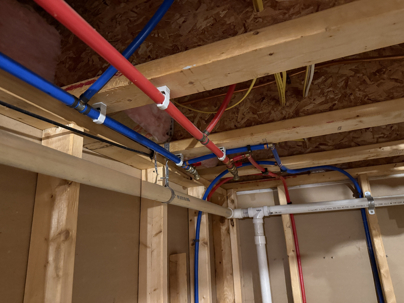
Most repipes today use either PEX or copper. Both are good choices; the right one depends on your home, budget, and water conditions.
Material | Strengths | Trade-offs |
PEX (cross-linked polyethylene) | Flexible, fewer fittings, resists scale and corrosion, handles freezing better, usually lower cost and faster install | Can’t be exposed to sunlight; some homeowners prefer metal |
Copper | Long track record, durable, recyclable | Higher material cost, more labor, can be affected by aggressive water |
What to Expect During a Repipe
A typical whole-home repipe takes a few days, depending on the size and layout of the house. Crews run new lines through walls, ceilings and crawl spaces, often working through small access openings rather than tearing out large sections of drywall. Your water is usually shut off only during working hours, so you can stay in your home. Once the new lines are tested, the access holes are patched.
Raleigh homes with crawl spaces are often easier to repipe, since many lines can be run from underneath without opening finished walls.
Not Sure What’s in Your Walls? Let Midtown Plumbing, LLC Take a Look
You don’t have to guess. At Midtown Plumbing, LLC, we’ve been helping Raleigh homeowners since 2013 as a locally and family-owned company. We’ll inspect your plumbing, identify what type of pipe you have, and give you a straight answer on whether a repair will do the job or a repipe makes more sense. No pressure, just honest advice from people who live and work here too.
Ready to find out what’s really behind your walls? Contact us today to schedule a plumbing inspection for your older Raleigh home.