
You turn on the tap, fill a glass, and drink. It's a habit so automatic that most of us never stop to ask what's actually in that water. But if you've noticed a strange smell, a cloudy glass, or spots building up on your dishes, your water may be trying to tell you something.
At Midtown Plumbing, LLC, we've been serving Raleigh-area homes since 2013, and water filtration is one of the most common concerns we hear about — often from homeowners who didn't realize it was even an option until a problem showed up. Here's what you need to know about common water quality issues, why they matter for your health and your home, and what a water filtration system can do about it.
Common Water Quality Issues in Raleigh-Area Homes
No two homes have the exact same water profile, but a few issues show up again and again:
Hard water. Much of the Raleigh area deals with water high in dissolved calcium and magnesium. Hard water leaves behind the chalky white scale you see on faucets and showerheads, makes soap harder to lather, and can leave skin and hair feeling dry.
Chlorine and chloramine taste or odor. Municipal water suppliers add disinfectants like chlorine to keep water safe during treatment and delivery. That's a good thing for public health, but it can leave water tasting or smelling faintly like a swimming pool by the time it reaches your glass.
Sediment and rust. Aging pipes, municipal line work, or well systems can introduce fine particles, sand, or rust into your water supply, sometimes visible as cloudiness or discoloration.
Well water contaminants. If your home relies on a private well, you're responsible for monitoring your own water quality. Common concerns include iron, manganese, sulfur (that "rotten egg" smell), nitrates, and bacteria.
Lead and old plumbing. Homes built before the late 1980s may still have lead solder or lead service lines. Lead doesn't usually change how water looks, smells, or tastes, which is part of what makes it concerning.
Why Water Quality Matters for Your Health and Safety
It's easy to assume that if water comes out of the tap, it's automatically safe. In most cases, municipal water does meet EPA safety standards by the time it leaves the treatment plant. But water quality can change between the treatment plant and your kitchen sink, and "meets the legal minimum" isn't the same as "ideal for your family."
A few reasons filtration matters beyond just taste:
- Contaminant exposure adds up. Low-level exposure to things like lead, disinfection byproducts, or certain bacteria may not cause obvious symptoms right away, but long-term exposure is the real concern, especially for children, pregnant women, and anyone with a compromised immune system.
- Aging infrastructure is a real factor. Many neighborhoods still have plumbing that predates modern safety standards. Filtration adds a layer of protection your home's original pipework was never designed to provide.
- Well water isn't regulated the way city water is. If you're on a well, there's no municipal treatment plant checking your water. Testing and filtration are entirely up to you.
- What you can't see can still affect you. Odor and clarity are only part of the picture. Many contaminants of concern are invisible, tasteless, and odorless.
The Case for a Home Water Filtration System
This is where a properly selected water filtration system earns its keep. Depending on what's actually in your water (testing is the best first step), filtration can:
- Remove sediment, chlorine taste and odor, and other aesthetic issues
- Reduce scale buildup that shortens the life of water heaters, dishwashers, and pipes
- Target specific contaminants like lead, iron, or bacteria with the right system
- Give you and your family peace of mind every time you turn on the tap
- Protect your plumbing investment by reducing mineral buildup and corrosion over time
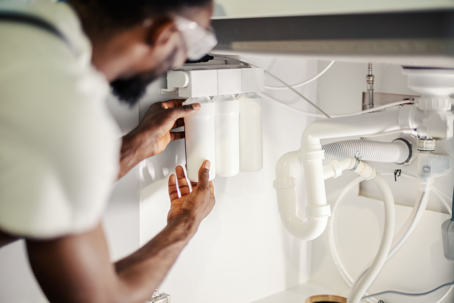
Filtration isn't one-size-fits-all. A whole-house water filtration system, a reverse osmosis unit under the kitchen sink, and a water softener all solve different problems, and the right choice depends on your specific water, your home's plumbing, and what matters most to your household.
Not Sure What's In Your Water? Start With a Test
The best filtration decision is an informed one. Before you invest in a system, it's worth having your water tested so you know exactly what you're dealing with, whether that's hardness, chlorine, sediment, or something more serious like lead or bacteria.
Our team at Midtown Plumbing, LLC has helped Raleigh-area families identify water quality issues and choose filtration systems that actually match their needs, not a one-size-fits-all package. If you've noticed a change in your water, or you simply want to know what's coming out of your tap, we're happy to help you figure out the right next step.
Ready to find out what's really in your water? Contact Midtown Plumbing, LLC today to schedule a water quality consultation in Raleigh, NC.