
There’s one plumbing question every homeowner should be able to answer:
“Where do I shut off the water to my house?”
You may never need to use your main water shutoff valve in an emergency. But if a pipe bursts, a water heater begins leaking, or a plumbing fixture won’t stop running, knowing where the valve is—and how to operate it—can help limit water damage.
Here’s how to find your home’s main water shutoff valve and what to do when you need it.
What Is a Main Water Shutoff Valve?
Your main water shutoff valve controls the water entering your home from the municipal supply or private well.
Closing the valve stops water from continuing to flow through most or all of your home’s plumbing system. That makes it one of the most important emergency controls in your house.
Think of it as the plumbing equivalent of your electrical breaker panel: you may not use it often, but you should know where it is before an emergency occurs.
Where Is the Main Water Shutoff Valve Located?
The location of a main water valve varies depending on the home’s age, foundation, climate, and plumbing layout.
Common locations include:
- Near the point where the main water line enters the house
- In a basement or crawl space
- In a utility or mechanical room
- Near the water heater
- Along an exterior-facing wall
- Inside a garage
- In an outdoor water-meter box
In homes with basements, the valve is often located on the wall facing the street. In slab-foundation homes, it may be in the garage, near the water heater, or outside.
Start by finding where the main water line enters your home and follow the pipe until you locate the first major shutoff valve.
What Does the Main Shutoff Valve Look Like?
Most homes have one of two common valve styles:
- Gate valve: A round, wheel-shaped handle that usually requires several turns to close.
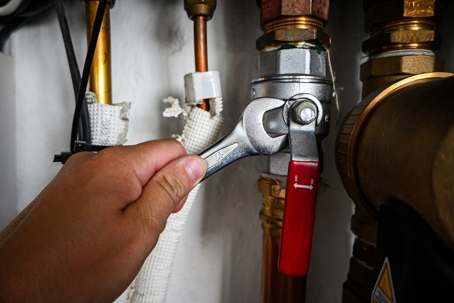
- Ball valve: A straight lever handle that typically turns one-quarter turn. The valve is generally open when the handle is parallel with the pipe and closed when it is perpendicular to the pipe.
Some homes have other valve types or more than one shutoff. If you’re uncertain, don’t turn random valves. A licensed plumber can identify the correct valve and explain how it works.
How Do I Shut Off the Water to My House?
If you have confirmed that you found the main shutoff valve:
- Make sure the area around the valve is safe and accessible.
- Turn a wheel-style valve clockwise until it stops, without forcing it.
- Turn a lever-style ball valve one-quarter turn until the handle is perpendicular to the pipe.
- Open a faucet to check whether the water pressure begins to drop.
Never force a valve that is stuck, heavily corroded, or damaged. Excessive pressure could break the valve or pipe and create a larger leak.
If the valve won’t move, contact a plumber before an emergency makes the problem more urgent.
When Should You Shut Off the Main Water Supply?
You may need to turn off your home’s water when:
- A pipe bursts or develops a major leak
- A water heater begins leaking heavily
- A fixture supply line breaks
- A faucet or toilet continues overflowing
- Plumbing work requires the home’s water supply to be stopped
- You discover unexplained water flowing inside the house
If the problem is limited to one toilet, sink, appliance, or fixture, you may be able to use its individual shutoff valve instead of shutting off water to the entire home.
However, if you cannot identify the source or the leak is spreading quickly, the main valve may be the safest way to stop additional water flow.
Important Electrical Safety Warning
Do not enter standing water if it may have reached electrical outlets, wiring, appliances, or the breaker panel.
Do not risk crossing a flooded area to reach the shutoff valve. Stay clear of the water and contact emergency professionals if you are unsure whether the area is safe.
Should You Test Your Main Water Shutoff Valve?
It’s wise to locate and visually inspect the valve before an emergency. If it is accessible and appears to be in good condition, operate it carefully and confirm that it shuts off the water.
Watch for warning signs such as:
- Corrosion or mineral buildup
- Water around the valve
- A loose or broken handle
- A valve that is difficult to turn
- Water that continues flowing after the valve is closed
A plumber can inspect, repair, or replace a shutoff valve that doesn’t work properly.
Don’t Wait Until Water Is on the Floor
A plumbing emergency is a terrible time to learn how your home’s water system works.
Take a few minutes today to locate your main water shutoff valve. Make sure other members of your household know where it is, and keep the path to it clear.
We would much rather help a homeowner identify a shutoff valve on a quiet afternoon than meet for the first time while water is pouring through the house.
Knowing where the valve is won’t prevent every plumbing emergency. But when something does go wrong, you’ll be glad you found it ahead of time.
Dealing with a major leak now? Shut off the water if it is safe to do so, then contact a qualified plumber for help.
Don’t wait for a plumbing emergency to find out your valve doesn’t work. Call Midtown Plumbing, LLC at (919) 373-6788 or contact us online today for trusted plumbing services!